
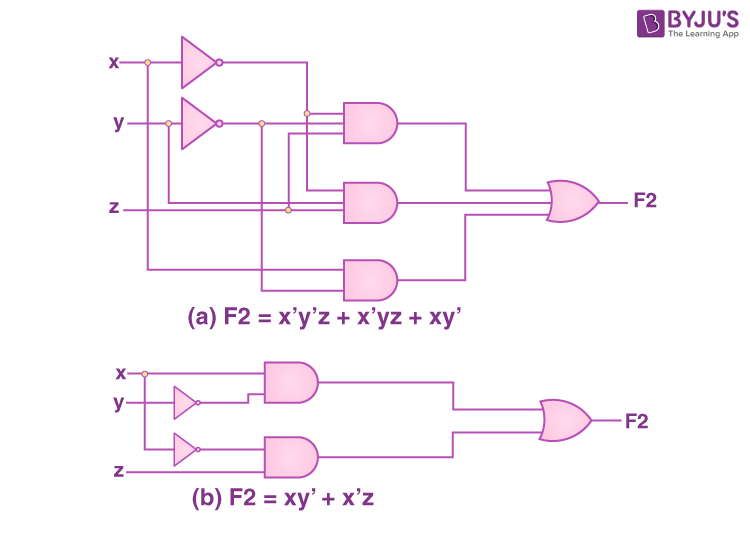
Logic gates are one of those topics that look simple but hide a lot of interesting ideas once you look closer. It’s also probably the first time I had that satisfying feeling of seeing that what you learn on paper is the same thing that happens in real circuits.
Voltage and Gates
From my understanding, digital electronics rely on the idea that you only need two stable ranges of voltage to represent information. These are:
Low voltage = 0 = FALSE
High voltage = 1 = TRUE
The exact values depend on the technology. For example, in many TTL circuits:
0 to ~0.8 V is LOW
~2.0 V to 5 V is HIGH
A logic gate reads a voltage, checks which band (low or high) the input falls into, and outputs a result. This is one reason digital circuits are robust. Even if the input voltage is slightly noisy, the gate snaps it back into a clean 0 or 1.
How Gates Use These Signals
A logic gate takes one or more input voltages, applies a logical rule, and produces an output voltage. The pattern is always:
Inputs → Gate logic → Output
For example, an AND gate reads two or more inputs and only outputs HIGH if all inputs are HIGH. Physically: transistors are arranged in series, so current can only flow when every input allows it.
A NOT gate reads only one input, and if the input is HIGH, the output is LOW. Physically, a transistor arrangement drives the output in the opposite state of the input.
With an OR gate, outputs are HIGH if at least one input is HIGH. Physically: transistors are arranged in parallel, so any HIGH input can supply current.
These logic rules match the truth tables we study:
| A | B | AND | OR |
| 0 | 0 | 0 | 0 |
| 0 | 1 | 0 | 1 |
| 1 | 0 | 0 | 1 |
| 1 | 1 | 1 | 1 |
The interesting part is that these aren’t just abstract relationships. Transistors enforce these rules through physical behavior, allowing or blocking current based on the voltage at their gate terminal.
From simple gates to full systems
Once you accept the idea that voltages can stand for TRUE and FALSE, the rest builds naturally:
Combine gates → create larger circuits
Combine enough circuits → make adders
Combine adders → form arithmetic units
Add memory circuits → registers, cache
Combine everything → CPU
All of computing rests on the behavior of transistors comparing voltages to thresholds. At its core, a processor is millions or billions of tiny switches checking whether a voltage is high enough to count as TRUE.
Why This Topic Feels Satisfying to Learn
I like topics that connect an idea from theory to a real implementation. Logic gates sit at that intersection. You can study them through:
- boolean algebra
- truth tables
- diagrams
But you can also trace them down to how transistors behave in silicon. There’s something straightforward about seeing a logical formula and knowing which physical structure inside a chip makes that formula happen. It turns the computer into something tangible rather than mysterious. You can follow the chain: voltage levels → transistor behavior → logic gates → functional blocks → whole systems.
The Takeaway
Understanding logic gates made computing feel less abstract. Seeing how voltages become logic, and how logic scales into full hardware, gives the whole field a sense of continuity. It’s easier to picture what’s happening.
It’s a small topic in a long list of things you learn in CS, but it’s one of the most grounded ones. It shows how something as simple as a voltage threshold can scale up into the complex systems we use every day.